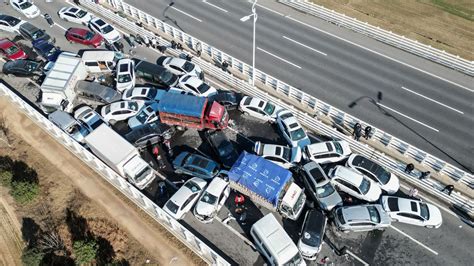

Insteadlaw - Hey there! Ever wondered what happens after one of those massive highway pileups you sometimes see on the news? It's not just about the immediate chaos; there's a whole legal process that follows, especially when it comes to settlements. We're going to dive deep into a hypothetical, yet very realistic, multi-car pileup highway settlement case study to break it all down for you. It's a complex dance of insurance, liability, and negotiation, and understanding it can be super helpful.
These types of accidents, often involving numerous vehicles, can be incredibly devastating. They don't just cause physical harm and property damage; they can also create a tangled web of legal and financial complications. Figuring out who's at fault and how everyone gets compensated is no small feat. It's a situation where having a good understanding of the process can make a huge difference for everyone involved.
Understanding the Chaos: What is a Multi-Car Pileup?
So, first things first, what exactly are we talking about when we say "multi-car pileup"? It's basically a chain reaction of collisions where multiple vehicles are involved, often in rapid succession. These typically happen on high-speed roadways like highways, where reaction times are shorter and consequences can be more severe. Weather conditions, driver distraction, or sudden braking can all be contributing factors.
These aren't your everyday fender-benders; they're large-scale events that can involve anywhere from three or four cars to dozens. The sheer number of vehicles and individuals involved makes them particularly challenging to manage, both in the immediate aftermath and in the legal proceedings that follow.
The Immediate Aftermath: Beyond the Wreckage
Right after a multi-car pileup, the scene is often chaotic. Emergency services are stretched thin, and the priority is always on providing medical attention to the injured and securing the scene. It's during this critical period that evidence begins to be gathered, albeit amidst the confusion.
Eyewitness accounts, police reports, and initial scene assessments are crucial pieces of the puzzle. They lay the groundwork for understanding the sequence of events and identifying potential causes, which will be vital later on in the settlement process.
Introducing Our Case Study: The "Interstate 75" Pileup
Let's imagine a scenario: a foggy Tuesday morning on Interstate 75. Visibility is low. A truck in the middle lane suddenly slams on its brakes due to an obstacle in the road. This causes the car behind it to rear-end it. Then, the car behind that car can't stop in time, and so on.
Within moments, we have a seven-car pileup. We have individuals with whiplash, a driver with a broken leg, significant property damage to all vehicles, and some cars are completely totaled. This is our starting point for exploring the settlement process.
Determining Liability: The Million-Dollar Question
The biggest hurdle in any multi-car accident settlement is figuring out who is liable, or at fault, for the damages. In our Interstate 75 case, it's not as simple as pointing fingers. Was the truck driver who braked suddenly at fault for not maintaining a safe distance or for an unexpected maneuver?
What about the drivers who couldn't stop in time? Were they following too closely? Was there a mechanical issue with their brakes? The investigation will involve analyzing the police report, witness statements, and potentially even expert reconstruction to piece together the chain of events and assign percentages of fault.
The Role of the "Lead" Vehicle
Often, in these pileups, the initial impact is key. The vehicle or driver that initiates the chain reaction usually bears a significant portion of the liability. In our case, we'd be looking very closely at the truck driver's actions and the conditions that led to their sudden braking.
However, even if the truck driver is deemed the primary cause, other drivers might still share some responsibility. For instance, if another driver was texting and missed the braking truck entirely, they could also be held partially liable for their own collision.
Shared Fault and Comparative Negligence
Many states operate under a system of comparative negligence. This means that even if you're partially at fault for an accident, you can still recover damages, but your compensation may be reduced by your percentage of fault. It's a crucial concept in settling these complex cases.
For example, if a jury decides that the truck driver was 70% at fault and the driver of the third car in the pileup was 30% at fault for following too closely, the third car's damages would be reduced by 30%. This can significantly impact the final settlement amount for each party.
Gathering Evidence: Building Your Case
To achieve a fair settlement, strong evidence is absolutely essential. This starts at the scene and continues long after the vehicles have been towed away. You'll want to collect anything that can help tell the story of what happened and the extent of your injuries and losses.
This includes photographs of the accident scene, vehicle damage, and any visible injuries. It also involves obtaining the official police report, exchanging insurance information with all involved parties, and keeping detailed records of all medical treatments and expenses.
Medical Records and Treatment
For those who sustained injuries, meticulous documentation of medical treatment is non-negotiable. This means keeping track of every doctor's visit, hospital stay, therapy session, and prescription. Your medical records are the primary evidence of the severity of your injuries and the necessity of the treatment you received.
Attorneys will use these records to demonstrate the causal link between the accident and your injuries, as well as to calculate the full extent of your medical expenses, both past and future. Don't underestimate the power of a well-documented medical history.
Vehicle Repair and Replacement Costs
Beyond injuries, the damage to vehicles needs to be accounted for. This involves getting estimates for repairs or, if the vehicle is totaled, determining its fair market value before the accident. Documentation here includes repair invoices, adjuster reports, and proof of the vehicle's pre-accident condition and value.
This part of the claim can sometimes be straightforward, but in a multi-car pileup, coordinating with multiple insurance companies to get fair compensation for vehicle damage can be quite a process in itself.
The Settlement Negotiation Process
Once liability is established and damages are quantified, the settlement negotiations begin. This is where insurance adjusters, attorneys, and claimants work towards reaching an agreement on compensation. It's often a back-and-forth process, with offers and counter-offers being made.
In a multi-car pileup, this process is amplified because there are multiple claimants, multiple insurance policies, and potentially multiple adjusters involved. Coordination is key, and it can become quite complex very quickly.
Dealing with Multiple Insurance Companies
One of the biggest challenges in a multi-car pileup settlement is navigating the different insurance policies. You might be dealing with the at-fault driver's insurance, your own insurance (if you have certain coverages like uninsured/underinsured motorist), and potentially even the insurance of other drivers involved if their fault contributes to your damages.
Each insurance company has its own procedures and motivations, and it's up to the claimant (or their attorney) to effectively communicate with and negotiate with each of them to ensure all aspects of the claim are addressed.
The Role of Attorneys
For complex cases like multi-car pileups, hiring an experienced personal injury attorney is highly recommended. Attorneys understand the intricacies of insurance law, liability determination, and negotiation tactics. They can handle the communication with insurance companies, gather necessary evidence, and fight for a fair settlement on your behalf.
An attorney can also help you understand your legal rights and options, especially when dealing with comparative negligence or if the insurance company is making a lowball offer. They're your advocate in a system that can feel overwhelming.
Factors Influencing Settlement Amounts
Several factors significantly influence the final settlement amount in a multi-car pileup case. These go beyond just the cost of repairs and medical bills.
The severity and permanence of injuries are paramount. For instance, a broken bone that heals perfectly will result in a different settlement than a spinal cord injury that leads to permanent paralysis. Pain and suffering, lost wages (both past and future), and loss of enjoyment of life are all elements that contribute to the overall value of a claim.
Potential Challenges and How to Overcome Them
Multi-car pileup settlements are rarely smooth sailing. You might face challenges like disputes over liability, disagreements on the value of damages, or insurance companies delaying the process. Persistence and strong legal representation are key to overcoming these hurdles.
Having a clear understanding of the process and being prepared to provide all necessary documentation can streamline things considerably. Don't be afraid to ask questions and seek clarification at every step.
Lessons Learned from Our Case Study
Our hypothetical Interstate 75 pileup highlights the critical importance of thorough investigation, clear evidence, and skilled negotiation in resolving multi-car accident claims. It shows that these aren't simple cases and often require professional expertise.
Ultimately, the goal of a settlement is to make the injured party whole again, as much as possible, by compensating them for their losses. While no amount of money can undo the trauma of such an event, a fair settlement provides financial relief and allows individuals to focus on recovery and rebuilding their lives.
Frequently Asked Questions (FAQ)
What if I'm not sure who caused the pileup?
It's common not to know exactly who started it, especially in chaotic multi-car accidents. This is where the police investigation, witness statements, and potentially accident reconstruction experts come in. An experienced attorney can help gather and analyze this information to determine liability.
How long does a multi-car pileup settlement usually take?
The timeline can vary greatly. Simple cases might resolve in a few months, but complex multi-car pileups can take anywhere from several months to a couple of years, especially if they go to trial. It depends on the complexity of liability, the severity of injuries, and the willingness of parties to negotiate.
Can I settle with my own insurance company after a pileup?
Yes, you might be able to settle with your own insurance company under certain coverages, such as uninsured/underinsured motorist (UM/UIM) coverage. This can be particularly helpful if the at-fault driver's insurance limits are insufficient to cover your damages.
What if the at-fault driver doesn't have insurance?
If the at-fault driver is uninsured, you would typically file a claim under your own uninsured motorist (UM) coverage. If they are underinsured (meaning their policy limits aren't high enough), you might file a claim under your underinsured motorist (UIM) coverage after exhausting their policy limits. This is another reason why maintaining good insurance is important.
Do I need a lawyer for a multi-car pileup settlement?
While not legally required, it's highly recommended to hire a personal injury lawyer for a multi-car pileup settlement. These cases are complex due to multiple parties, insurance companies, and potential disputes over liability and damages. An attorney can navigate these complexities, protect your rights, and work to secure the best possible outcome for you.
Written by: Michael Brown